◈@felixtkia998
On Peptide Purity
Just How To Review A Peptide Coa Actual Vs Phony Significantly, this purity number is Regenerative Medicine usually figured out after filtration (e.g. by HPLC) and focuses on peptide impurities-- it does not count residual water, salts, or counter-ions in the dried out peptide powder. To put it simply, the purity percent is about the make-up of peptide species in the example, not the weight contribution of water or salts. If you have actually ever gotten an artificial peptide for a laboratory experiment, you've most likely saw a purity percent on the certification of analysis-- normally values like 95%, 98%, or even 99%. Peptide pureness is an essential top quality metric that tells you what portion of a peptide sample is the intended item versus unwanted spin-offs. In simple terms, a peptide provided as 95% pure is composed mostly of the target peptide (95%), with the staying ~ 5% comprised of pollutants. These impurities can consist of things like shortened or abbreviated series, removal variations, oxidized deposits, or other minor side-products from the Certificate of Analysis synthesis procedure. Peptide Examination is a US-based lab offering HPLC and UV evaluation for peptide verification. The lab stresses efficient sample handling and accuracy in peptide evaluation. The supplier rating system aggregates checking results, permitting researchers to compare top quality trends throughout various vendors. The key approaches for measuring peptide pureness are High-Performance Liquid Chromatography (HPLC) and Mass Spectrometry (MS). HPLC separates the target peptide from impurities, quantifying pureness. MS validates the peptide's identification by gauging its exact mass. These 2 methods give corresponding details and are the gold standard in the peptide sector. Peptide purity means the percent of the target peptide sequence in a sample contrasted to contaminations. It's important due to the fact that contaminations can alter study results, influence medicine security, and concession experimental reproducibility, making high pureness important for exact scientific research.
Technique Transfer & Recognition Choices
Desalted peptides function well for ELISA coating, some cell-based assays, and applications where modest purity serves. After synthesis and purification, peptides are usually lyophilized (freeze-dried) as salts. One of the most typical counterion is trifluoroacetate (TFA) from the HPLC purification solvents, though some peptides are supplied as acetate or hydrochloride salts. These counterions aren't "impurities" in the HPLC sense-- they do not appear as different optimals-- yet they do contribute to the total mass of the powder. As the portion of natural solvent progressively raises throughout the run, particles are released from the column in order of their hydrophobicity-- the more hydrophobic a peptide, the longer it takes to elute (clean off). Considering that contaminations usually differ from the target peptide by at least one amino acid, they have somewhat various hydrophobicities and show up as different heights on the chromatogram. RUO COAs do not consist of endotoxin or sterility testing, although these are periodically added on by RUO vendors. This is mostly harmless as a lot of residue (TFA, residual moisture) is benign. Nonetheless, there is hazardous non-peptide material, which should be evaluated for. The mobile phase, typically a mixture of water, acetonitrile, and an acid modifier, is stored in tanks and delivered with the system by a high-pressure pump.Shop Coa-verified Research Study Peptides
What maker is made use of to evaluate peptide pureness?
Peptide pureness is consistently determined by HPLC (high efficiency fluid chromatography). This technique makes it possible for separation and relative metrology of each peptide synthesized. If combined to a mass spectrometer (MS), this offers molecular mass/ identity details of the target peptide and coming with pollutants.
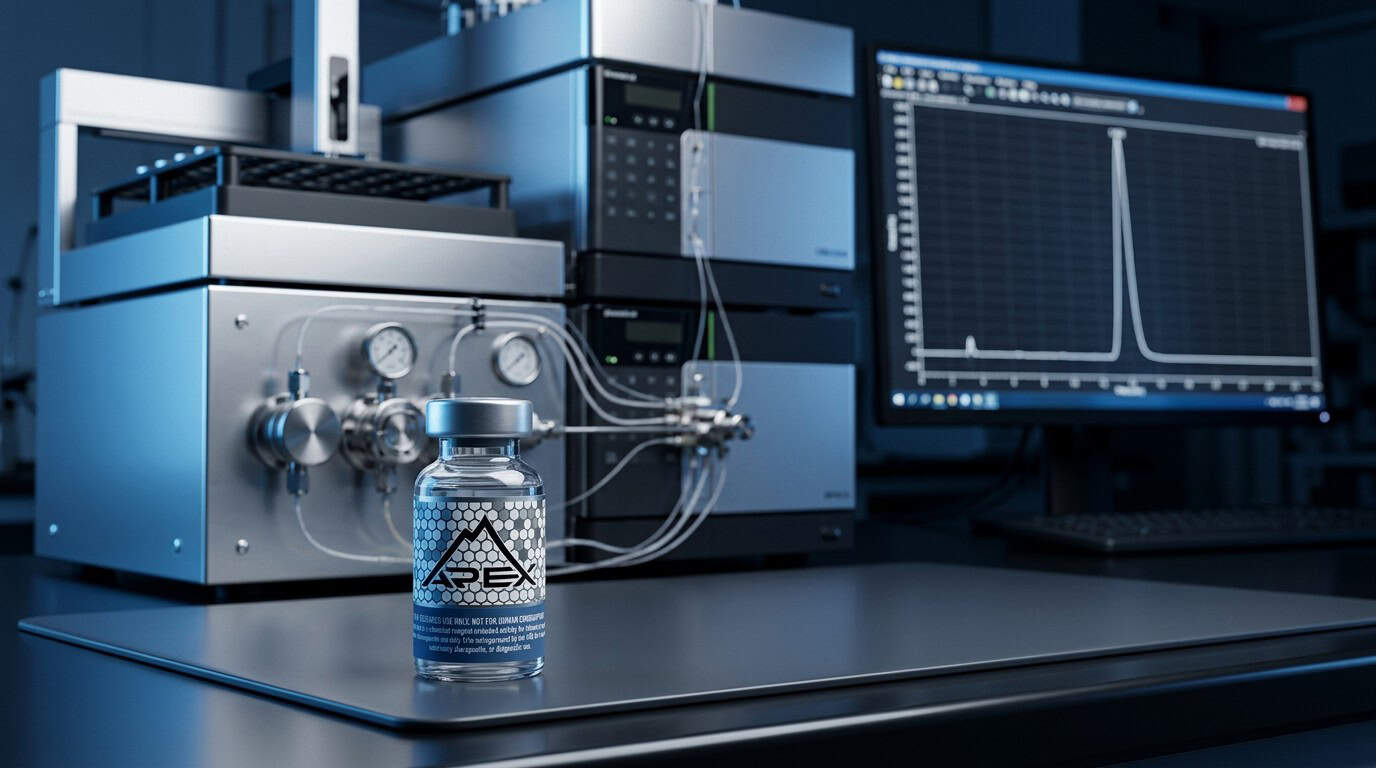
- HPLC can reveal the existence of extra optimals; LC-MS can aid appoint likely identifications to those associated varieties.
- For exploratory screening assays where rough task information is sufficient, 95% purity might be acceptable.
- Third-party screening labs of note in the peptide research study supply chain consist of recognized logical chemistry solutions that operate under ISO or comparable high quality monitoring frameworks.
- HPLC is just one of one of the most typically made use of methods in peptide purity testing.
- Gauging peptide purity is usually made with logical high-performance liquid chromatography (HPLC), usually combined with mass spectrometry (MS) for identity verification.
- As an ideal practice, constantly verify that your tester is providing MS.
Complete Checklist Of The Leading 100 Peptide Vendors
In concentration-response experiments, these pollutants can move contours, flatten plateaus, or introduce biphasic behavior that covers truth task of the target substance. Peptides including methionine or cysteine residues are prone to oxidation. Methionine can be oxidized to methionine sulfoxide; cysteine can develop unwanted disulfide bonds or be oxidized to sulfinic or sulfonic acid derivatives. These alterations transform the peptide's biological task and chromatographic account. Peptides in microspheres and nanoparticles may ensnare with matrices, making it tough to divide totally free and encapsulated kinds. Peptide screening is the set of logical checks utilized to review a peptide sample prior to it is made use of in a research process. In practical COA evaluation, the term usually describes pureness testing, identification testing, and documents evaluation. Purity screening asks how much of the identified example is the main peptide versus associated pollutants. Identity testing asks whether the gauged mass or sequence-related evidence matches the desired peptide. Documentation review asks whether the record is batch-specific, traceable, and outlined enough to be audited. Attaching you with relied on peptide vendors and makers, making certain top quality, reputable items for research and development needs. Discover our curated choice for purity, uniformity, and regulative conformity. COAs for Palmetto Peptides products are available on private item pages. Along with this peptide screening overview, those web pages form the trust-methodology layer behind the item magazine. The US Pharmacopeia considers 98% the minimum appropriate criterion. For accuracy applications, architectural biology, or safety-critical usages, focus on 98%+ pureness. The peptide dosage graph thinks affordable purity levels for exact application. Peptides like GHK-Cu utilized for skin applications could be applied topically rather than injected. While injection-grade requirements might be much less vital for topical usage, identification confirmation stays crucial to make sure the desired substance is being applied. 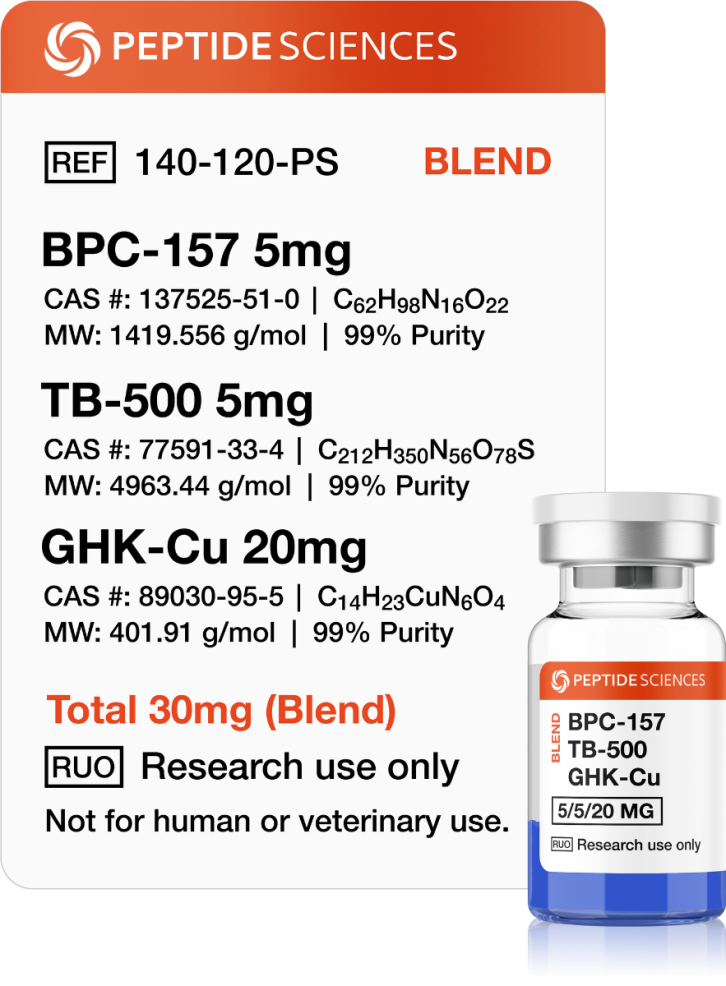
◈