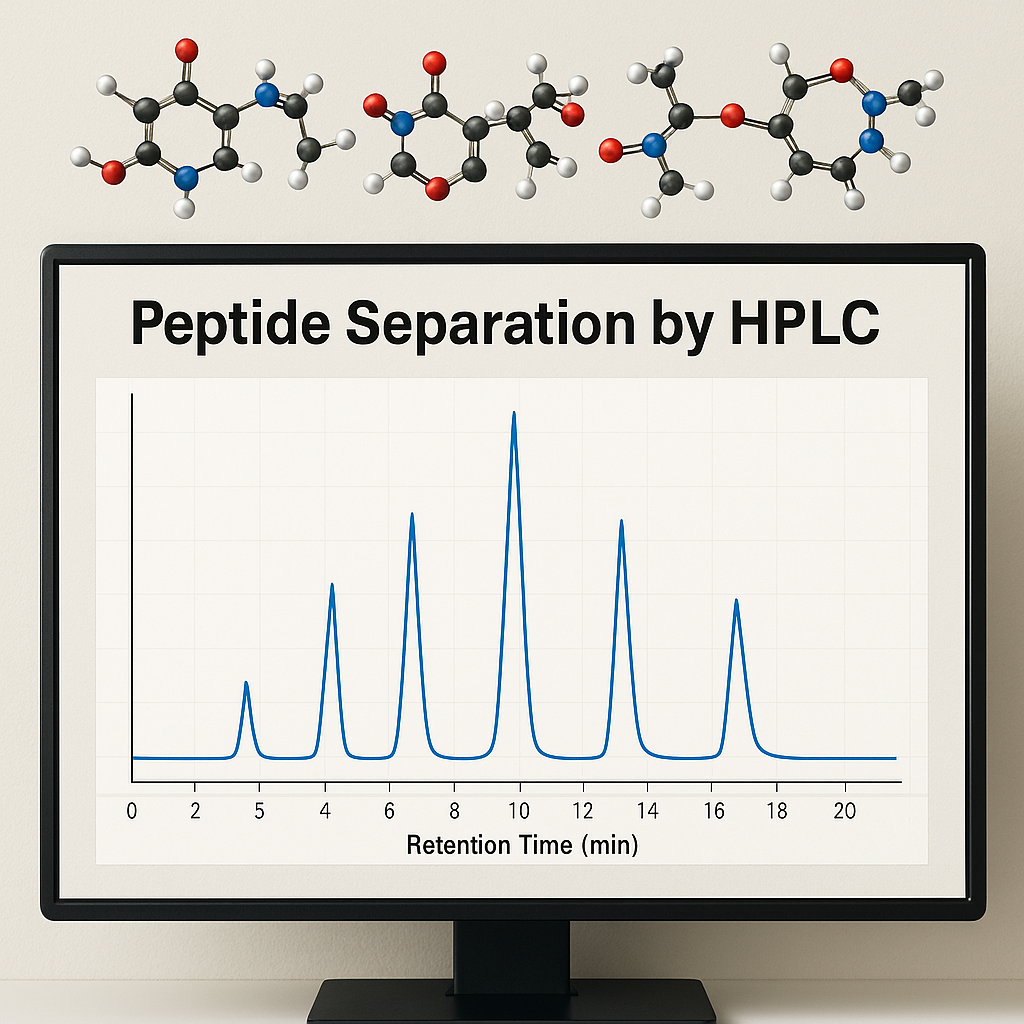
Just How Hplc Is Made Use Of To Inspect Peptide Purity
How To Check Out A Peptide Coa Actual Vs Fake Peptide pureness isn't simply a number on a label-- it's a home window into the high quality of the artificial process and a predictor of exactly how reputable your research study outcomes will be. During solid-phase synthesis, each amino acid coupling action has a yield of about 99-- 99.8%. When a coupling falls short, the growing chain is covered to stop additional elongation of Multi-Peptide Formula the incorrect sequence. The outcome is a peptide that's shorter than planned-- missing one or more amino acids. Customized guidance for individual researchers seeking trustworthy peptide providers. The pump preserves specific flow rates, commonly in the variety of 0.5 to 2.0 mL/min relying on the approach and column format. High stress forces the mobile stage with tightly loaded particles inside the column, creating sharper separations and higher resolution than traditional low-pressure chromatography. At Maxed Out Substances, we make peptide transparency a top priority. Every product we lug is lab-tested and confirmed by third-party partners, so researchers know specifically what they're working with. The most effective nootropic peptides offer cognitive advantages only when effectively made and verified. Yet these COAs often come from the supplier's very own screening, producing an evident dispute of rate of interest. Also when vendors claim third-party screening, verifying those insurance claims needs effort most purchasers do not make. Scientists often evaluate mass spectrometry results together with HPLC data to construct a more complete understanding of item top quality. As the research study peptide industry remains to grow, recognizing exactly how peptide pureness testing functions can assist scientists make more educated sourcing choices and much better review vendor openness. Pollutants aren't simply non-active fillers; they can proactively disrupt your job.
Partial peptide pieces can result from incomplete synthesis or post-synthesis deterioration.
These are general study context monitorings, not product requirements.
Our Certified Peptide Synthesis Lab is specifically developed and operated to permit the custom-made synthesis of peptides based on specified treatments and under recommended lab problems.
Problem In Determining Encapsulation Efficiency And Medicine Loading In Formulas
" It does not, by itself, verify that the main top is the designated peptide. A sample can produce a clean-looking chromatogram with one leading height and still be the incorrect substance if identification was never confirmed. HPLC steps splitting up and family member peak area; mass spectrometry steps mass-to-charge habits that can be made use of to verify molecular identification.
What Peptide Testing Can And Can Not Show
These fragments are usually smaller than the target peptide and may elute at various retention times. HPLC can show the visibility of extra peaks; LC-MS can assist designate likely identifications to those related varieties. Amino acid analysis or various other quantitative methods can sustain outright web content. Chiral approaches can attend to enantiomeric pureness where stereochemistry is a problem. Residual-solvent or water-content examinations can matter in manufacturing or security contexts. These are important in the appropriate setup, however they need to be interpreted as method-specific proof instead than a global replacement for HPLC and MS.
Where can I send my peptides to test for purity?
ACS Peptide Peptide Blend Evaluating Labs is an expert peptide evaluation laboratory that accepts samples from all 50 states. Whether you need to check peptide pureness, verify a distributor''s Certification of Analysis, or run comprehensive impurity testing, our lab supplies fast, exact outcomes with thorough reporting.
Peptide Test is a US-based lab offering HPLC and UV analysis for peptide confirmation. The laboratory highlights effective example processing and precision in peptide analysis. The supplier ranking system accumulations evaluating outcomes, permitting researchers to compare quality fads across different distributors. Notably, pureness percentages explain chemical structure only-- they do not suggest sterility or biological suitability. Peptides from Maxed Out Substances are supplied exclusively for research laboratory research usage and are not intended for human or vet functions. The key point is not to perplex purity (HPLC percentage of the primary peptide vs contaminations) with total web content. For speculative preparation (like determining molar concentrations), both purity and web web content serve numbers, yet purity is what shows the chemical homogeneity of the peptide example. Peptides and their pollutants have different hydrophobicities and for that reason spend different quantities of time connecting with the C18 stationary stage before eluting into the detector. Much more hydrophilic substances elute early (reduced retention time); more hydrophobic substances elute later on (high retention time). The target peptide elutes at a particular retention time, and impurities elute at different times-- dividing them spatially on the chromatogram. In the common peptide COA context, top purity normally describes the portion of overall chromatogram area stood for by the main peptide height. It is an area-percent pureness dimension, not a full identity or activity examination. Peptide testing is powerful, however researchers must check out the scope of each technique very carefully.